
What did this call cost?
Provider bills aren’t session truth. Need STT / LLM / TTS dollar breakdown and margin against what you charge — not a DIY rate card spreadsheet.
The gap
Cloud Insights and generic LLM traces leave the questions that matter for voice unanswered.
Provider bills aren’t session truth. Need STT / LLM / TTS dollar breakdown and margin against what you charge — not a DIY rate card spreadsheet.
Completion rate isn’t an outcome. Score goals and call results, then separate agent stalls from audio degradation and latency.
Your dashboard, exports, and shareable session review — not a Cloud retention cliff or another Postgres you have to wire yourself.
What Parlot gives you
The surface voice-agent teams build by hand — already modeled for voice turns, not flat traces.
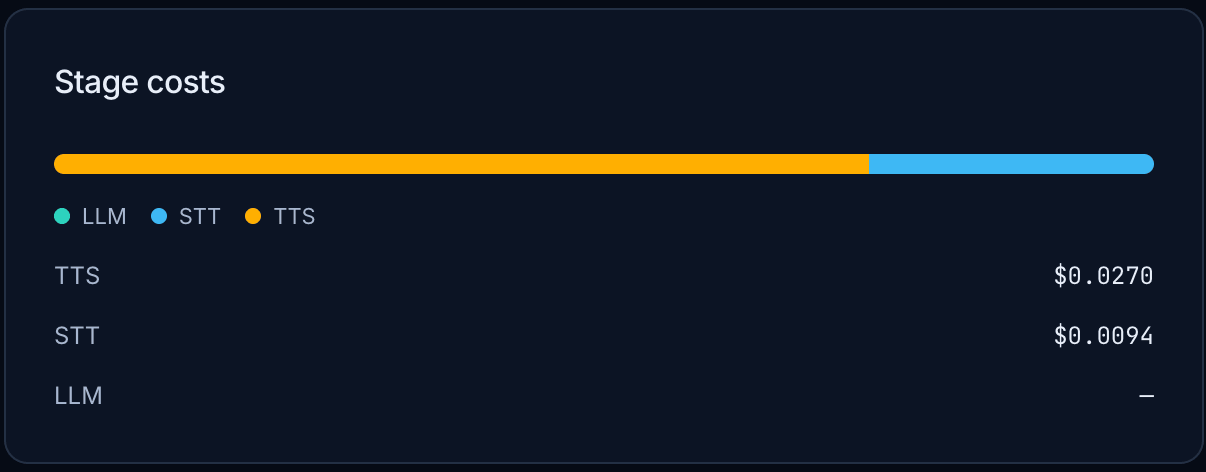
Cost
Bring your rate card and overrides. See stage costs on every call, then Cost & margin across agents and clients — so you stop reconciling UsageCollector against provider invoices alone.
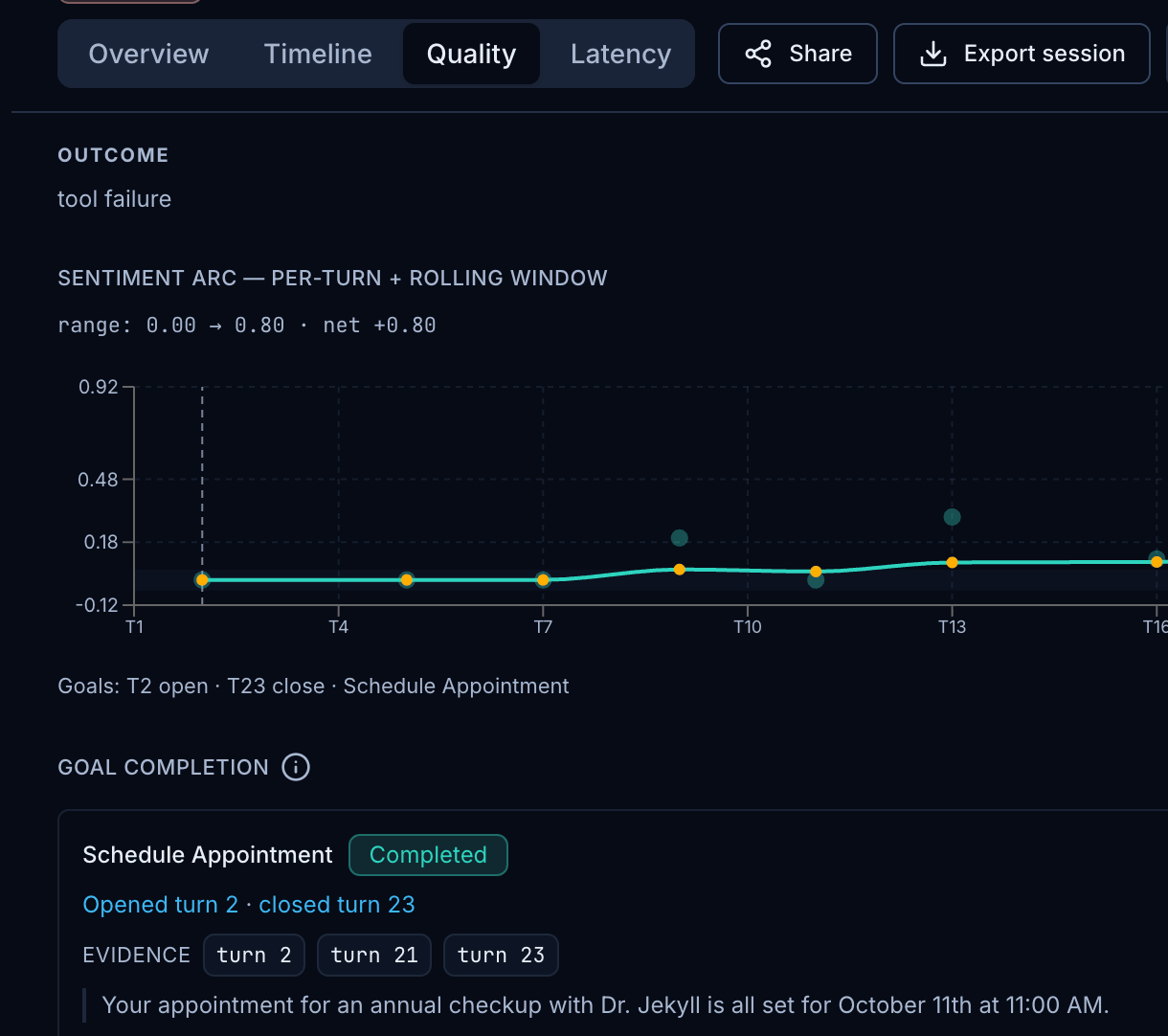
Quality & Speed
Outcomes and goals stay separate. Latency stacks, attention ranking, and turn timelines that understand interruptions and handoffs.
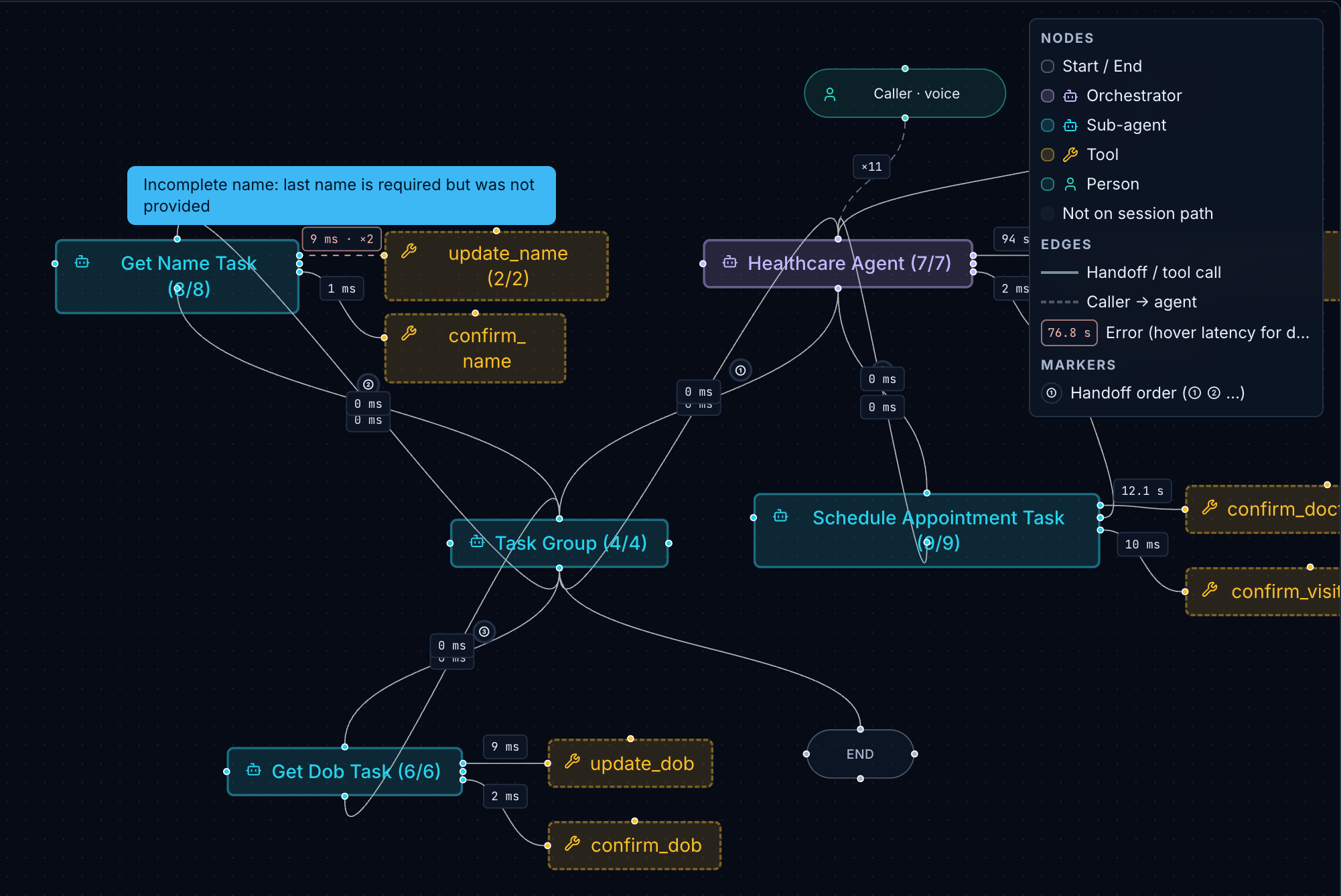
Topology
Orchestrator, sub-agents, tools, and handoff order on one graph — with error markers on the edge that failed. Multi-agent LiveKit and Pipecat sessions, not a flat trace dump.
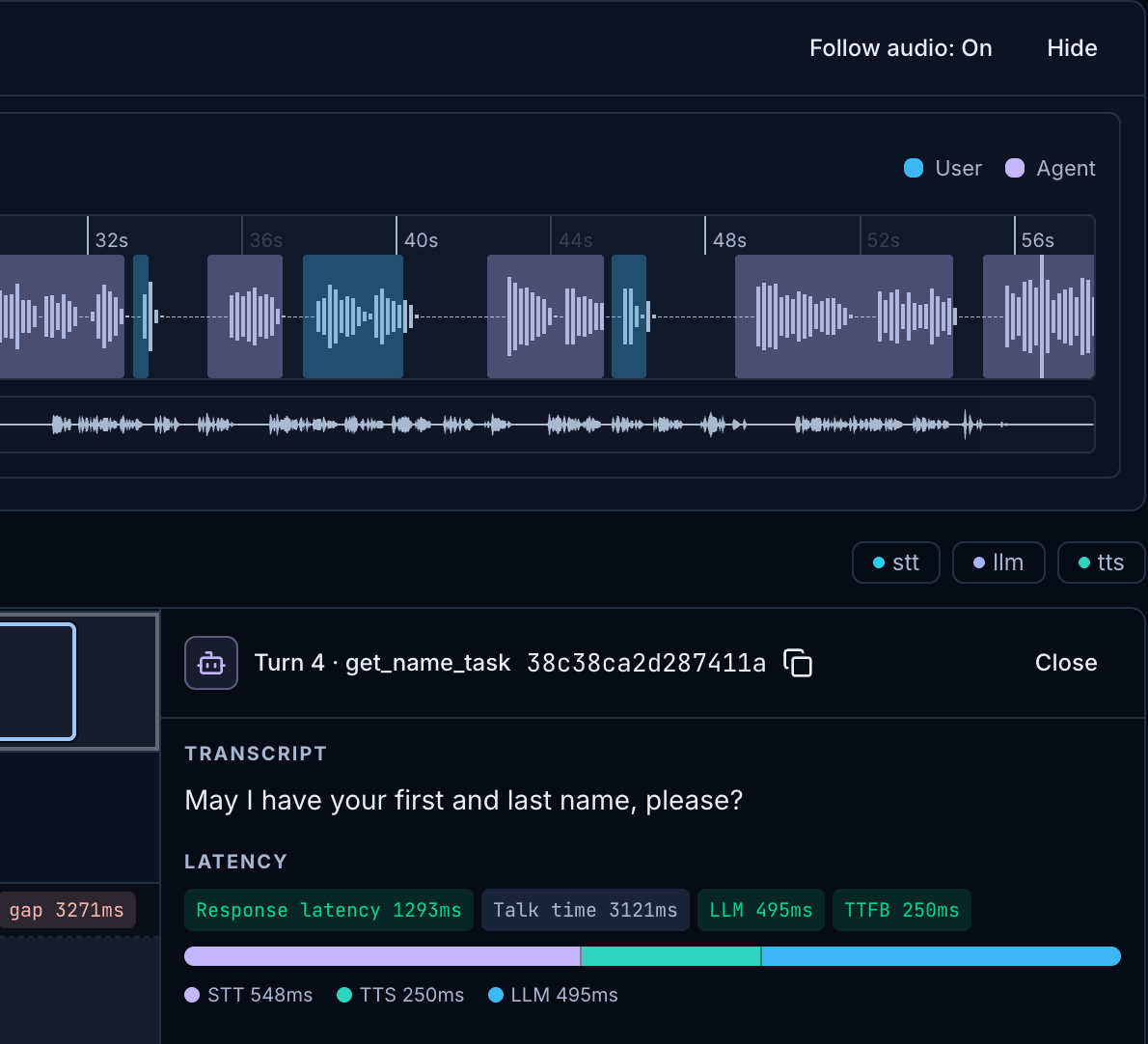
Your data
Sessions with summaries, async export, and share links. Works with LiveKit Cloud or self-hosted media — ship analytics to a place you own instead of rebuilding Agent Insights.
Request early access — we are onboarding waitlist invites first.
OpenTelemetry SDK for LiveKit, Pipecat, and LangGraph —
parlotize() once.